
Stop Selling Logos on Screens: How Physical Assets Unlock High-Value Sponsorship
Most association events don’t underperform because the team is incompetent. They miss their targets because no one steps back to look at the commercial engine underneath.
Too often, we default to running events as passive cost centers instead of outcome-led profit engines.
The clearest symptom? The traditional Gold, Silver, and Bronze sponsorship deck.
At the top of those decks, you’ll usually find low-value, passive inventory—like logos rotating on digital screens, app banners, or lanyards. We price them high because they are visible, but delegates increasingly tune them out.
Sponsors don't spend serious budget simply to “have a logo on a screen.” They invest to achieve tangible commercial outcomes. To unlock higher-margin revenue, associations need to stop relying on passive visibility and start integrating functional, physical branding assets into the event environment.
The Reality of Sponsor ROI
Sponsors are looking for three things: Audience, Access, and Interaction.
A logo on a slide gives them fleeting visibility and virtually no interaction. But when you give a sponsor ownership of a functional physical asset, you change the spatial dynamic of the room and create a destination for direct engagement.
┌──────────────────────────────────────┐
│  OLD MODEL: Logos on Screens         │
│  • Low-touch, passive visibility     │
│  • Easily ignored by delegates       │
│  • Hard to justify premium pricing   │
└──────────────────────────────────────┘
                   │
                   ▼
┌──────────────────────────────────────┐
│  NEW MODEL: Physical Brand Assets    │
│  • High-touch interaction zones      │
│  • Real conversations with buyers    │
│  • Supports high-value sponsorship   │
└──────────────────────────────────────┘
Association Case Study: Turning FestivalChairs into High-Margin Sponsorship Revenue
A good example is FestivalChairs.com.
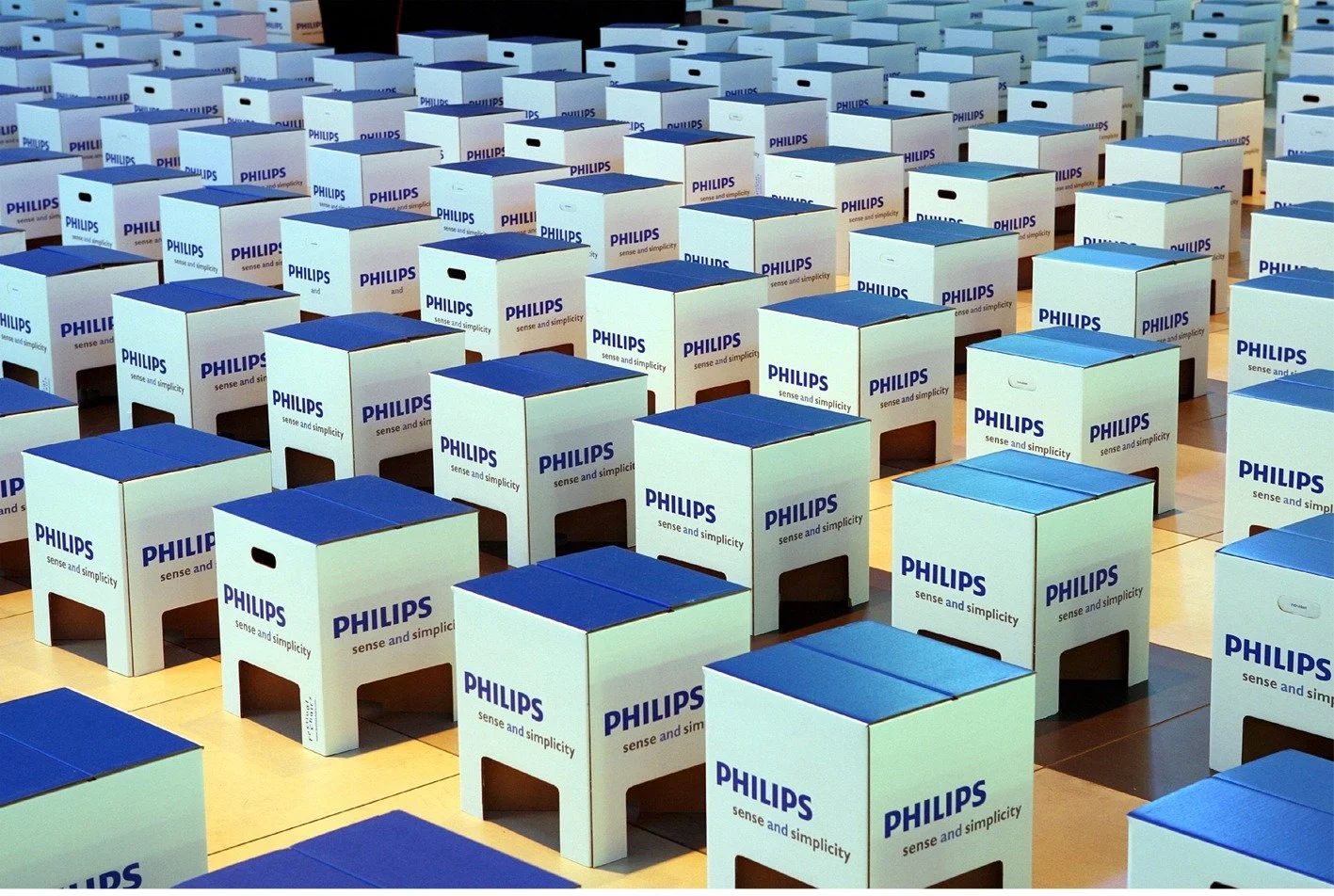
FestivalChairs produces 100% recyclable, FSC-certified Dutch-design cardboard stools that fold flat, support up to 200kg, and can be fully custom-printed.
Most association organisers would initially see a FestivalChair as an operational item: extra seating that needs to be purchased for the event.
Commercial thinkers see something different.
They see a physical sponsor asset that also happens to function as furniture.
That distinction matters.
Instead of selling a standard £2,000 “Silver Package” built around a screen logo, an organiser could use FestivalChairs to redesign part of the event floor and create entirely new sponsor inventory.
For example:
The Executive Matchmaking Hub:
Take 20 custom-printed FestivalChairs and a matching branded table and place them in an underused corner of the exhibition hall. Package the area as “The Innovation Roundtable Zone.” The sponsor now owns a recognisable physical destination where delegates actually sit down, meet and do business.The “Schedule in Your Hands”:
Print the association’s event agenda, key messages and session QR codes directly onto the FestivalChair panels. A partner funds the deployment as the official “Seat & Schedule Partner,” giving the sponsor repeated physical exposure throughout the event instead of a few seconds of screen time.Turn Meeting Space into Sponsor Inventory:
Small groups of branded FestivalChairs can be placed throughout networking areas, lounges and wide walkways. Suddenly, space that previously generated no revenue can become a series of sponsored meeting points.Portable Brand Equity:
Because FestivalChairs fold flat and are lightweight, delegates can take them home or back to their offices. The sponsor’s visibility can therefore continue long after the event has finished.
This is the broader commercial opportunity behind products such as those from festivalchairs.com: the organiser is not simply buying furniture. The organiser is creating new physical sponsorship inventory.
Unlocking Unused “White Space”
Event halls are full of commercially underused space—wide walkways, empty foyers, transition areas and quiet corners.
Traditionally, those areas produce almost no revenue.
Modular physical assets such as FestivalChairs allow organisers to turn that dead space into monetisable micro-hubs without committing to expensive temporary construction.
A few printed stools and a table can become:
an expert discussion zone,
a hosted-buyer meeting point,
a charging lounge,
a matchmaking area,
a sustainability hub,
or a sponsored networking corner.
The commercial principle is simple:
If delegates use the space, the space can potentially become sponsor inventory.
Creating Sponsorship That Delegates Actually Use
There is another important distinction.
Many sponsorship products interrupt the delegate experience.
Pop-ups, banners and advertising screens compete for attention.
Functional physical branding can do the opposite: it can improve the delegate experience while creating visibility for the sponsor.
A FestivalChair gives someone somewhere to sit.
A branded table creates somewhere to meet.
A printed QR code gives someone useful information.
A sponsored networking hub helps people connect.
That creates a much stronger proposition than simply promising a sponsor thousands of “impressions.”
Sustainability Can Become a Commercial Asset
Physical sponsorship also connects naturally with one of the biggest themes in modern event strategy: sustainability.
For many associations, sustainability initiatives are treated primarily as a cost or compliance issue.
Commercial teams should look at them differently.
Sponsors increasingly want visible ways to demonstrate environmental commitments. A partner funding FSC-certified, recyclable event furniture offers a tangible way to connect its brand with the event’s sustainability programme.
FestivalChairs, for example, are made from cardboard, are fully recyclable and are produced in the Netherlands.
That allows an organiser to create propositions such as:
Official Sustainable Seating Partner
or
Circular Event Partner
Instead of sustainability being another line in the event budget, part of that investment can potentially become sponsorable inventory.
The Bigger Opportunity: Selling Outcomes
The real shift is not from digital branding to cardboard furniture.
The shift is from selling media inventory to selling commercial outcomes.
Don’t sell:
“20 branded FestivalChairs.”
Sell:
“A dedicated networking hub where 200 delegates will sit, meet and interact throughout the day.”
Don’t sell:
“A logo printed on seating.”
Sell:
“Exclusive ownership of the event’s matchmaking zone.”
Don’t sell:
“Furniture.”
Sell:
Access, interaction and useful physical presence.
That is also why a supplier such as FestivalChairs.com can be much more interesting to a commercial event team than it first appears. The physical product is only the starting point; the real value lies in what the organiser can build and sell around it.
Three Steps to Shift Your Sponsorship Strategy
If you want to move away from low-value logo placements, start with these three moves:
Audit Your Venue for “White Space”
Stop treating furniture purely as an operational line item. Look at your floor plan and identify spaces where small physical hubs could create new sponsor inventory.Sell Outcomes, Not Ingredients
Don't sell “20 custom-printed stools.” Sell the outcome:
“Host 10 curated C-suite discussions in our dedicated Eco-Lounge.”Connect Buyers with Sellers
Your members and delegates represent an audience of buyers. Design physical spaces that get sponsors and decision-makers sitting across from each other.
The associations that rethink sponsorship this way may discover that some of their most valuable commercial inventory isn’t on a screen at all.
It is sitting on the event floor.
And sometimes, quite literally, delegates are sitting on it.
Is your association leaving money on the table with generic sponsorship decks?
Let’s review your event portfolio and floor plan to identify hidden commercial opportunities. Get in touch with Active Media to set up a commercial audit — and explore examples of physical event branding at FestivalChairs.com